

Shopping for car insurance probably isn't high on your list of fun weekend activities. But let's be real—sticking with the same company year after year just because it's easy can cost you a small fortune. Knowing when to pull the trigger and start comparing rates is the first real step toward keeping more of your money.
The signs are usually pretty clear. That renewal notice hits your inbox, and the new premium makes your jaw drop. Even a small, unexplained bump in price is a perfectly good reason to see what else is out there. In the insurance world, loyalty doesn't always get you the best deal. In fact, some companies count on you not looking around so they can nudge your rates up over time.
Big Life Changes Are a Great Time to Shop
Besides your annual renewal, major life events are the best triggers for re-evaluating your car insurance. These moments can completely change what you need from a policy and what you'll pay for it, opening the door to some serious savings.
-
You Bought a New Car: A new ride means a new risk profile in the eyes of an insurer. The company that gave you a great deal on your old sedan might not have the best rates for your new SUV or EV.
-
You Moved: Where you live is a huge factor in your premium. Moving, even just across town to a new ZIP code, can significantly raise or lower your rates.
-
Your Credit Score Went Up: A lot of insurers use a credit-based insurance score to help set their prices. If you've been working on your credit and seen it improve, you could qualify for much lower rates with a different company.
-
Your Household Changed: Getting married, adding a teen driver to your policy, or having a student go off to college without a car are all moments that should make you pick up the phone and get new quotes.
Before we dive deeper, it's helpful to have a quick reference.
Quick Checklist: Should You Shop for New Insurance?
Use this checklist to quickly assess if it's the right time to start comparing car insurance quotes.
| Common Trigger | Is It Time to Compare? | What to Look For |
|---|---|---|
| Renewal Price Hike | Yes, definitely. | A new provider who rewards new customers, not just loyal ones. |
| Bought a New Vehicle | Yes, absolutely. | Insurers with better rates for your car's specific make and model. |
| Moved to a New Area | Yes, it's a must. | Companies that offer lower premiums in your new ZIP code. |
| Credit Score Improved | Yes, you could save a lot. | Providers who heavily weigh good credit in their pricing. |
| Added a Teen Driver | Yes, without a doubt. | Insurers known for good student discounts or teen driver programs. |
| It's Been Over a Year | Yes, it's smart. | The current market leader for your specific needs and driving record. |
This table isn't exhaustive, of course, but it covers the most common reasons you'd want to start the comparison process.
Make It an Annual Financial Habit
Even if nothing major has changed in your life, you should get into the habit of shopping for car insurance at least once a year. Think of it as a routine financial check-up, just like reviewing your budget or retirement accounts.
The insurance market is always in flux. New discounts pop up, and companies constantly adjust their pricing models to stay competitive. The great deal you snagged last year might be just average today. A big part of this review is also making sure you understand what you're paying for. Taking a moment to read up on what is full coverage can help you decide if your current policy still fits your life.
In the U.S. alone, a huge market for auto insurance, somewhere between 12-15% of drivers switch their provider every year to lock in a better rate. Most policies are set for six or twelve months, so your renewal period is the perfect time to make a move without worrying about cancellation fees.
Decoding Your Current Insurance Policy

Before you even think about shopping for new car insurance, you have to get a firm grip on what you’re paying for right now. It's a common mistake to jump straight into getting quotes, but that’s like grocery shopping while you're hungry and without a list—you're bound to make some bad choices.
Your most important tool here is the declarations page of your current policy. This single page is essentially the SparkNotes version of your coverage. It cuts through all the dense legal language and gives you the exact numbers and terms you need to know.
Think of it as a quick audit of your policy. The goal is to establish a clear benchmark. This way, when you start looking at other options, you can make a true apples-to-apples comparison and avoid accidentally dropping a crucial protection just to shave a few bucks off your premium.
Key Details to Pinpoint on Your Policy
When you pull out that declarations page, you're on a fact-finding mission. You’re looking for the specific components that make up your safety net. If some of the terms feel a bit like a foreign language, it’s worth getting a quick refresher. Kwik Kar offers some great essential information about car insurance that can help you get your bearings before diving into your own policy.
Once you're ready, zero in on these critical details:
- Liability Limits: Look for a set of three numbers, often written something like 50/100/25. This isn't just random jargon. It tells you the maximum (in thousands of dollars) your insurer will pay for bodily injury per person, total bodily injury per accident, and property damage per accident.
- Collision & Comprehensive Deductibles: This is your out-of-pocket cost before the insurance company starts paying for repairs to your car. A $500 deductible is pretty standard, but yours could easily be higher or lower. Make a note of it.
- Optional Coverages: Do you have any add-ons? Things like rental car reimbursement, roadside assistance, or uninsured motorist protection are common. Jot these down so you know whether to ask for them in your new quotes.
A huge mistake I see people make is fixating only on the price tag. Your liability limits and deductibles are infinitely more important. Dropping your coverage to save $20 a month might feel like a win, but it could leave you on the hook for tens of thousands of dollars if you're in a serious accident.
Creating Your Comparison Baseline
With these key pieces of information collected, you've successfully built your baseline. You now have a crystal-clear picture of the protection you currently have. This isn’t just about finding a cheaper plan—it’s about finding better value without putting your finances at risk.
If you want an even deeper dive into what everything means, our guide on how to read an insurance policy can walk you through it section by section. Having this baseline ready will make the next phase—gathering and comparing quotes—so much more effective.
Gathering and Comparing Insurance Quotes the Smart Way

Okay, you've reviewed your current policy and know exactly what you're working with. Now comes the part where you can actually find some serious savings: shopping the market. This is your chance to see who really offers the best value for your situation.
You've got a few ways to approach this. You could go directly to the websites of a few major insurance companies, team up with an independent agent who can pull quotes from multiple carriers at once, or use an online comparison tool. Honestly, the best strategy I've seen is using a mix of all three. Start by getting a baseline from a couple of big-name providers online, then talk to an agent. They often have access to excellent regional insurers you’ve probably never even heard of.
Get Your Ducks in a Row First
Before you start plugging in your information everywhere, do yourself a favor and get everything organized. There’s nothing more frustrating than having to stop midway through a quote to dig up a document.
Here’s a quick checklist of what you'll need:
- Vehicle Info: The make, model, year, and Vehicle Identification Number (VIN) for every car you need to insure.
- Driver Details: The driver's license number, birthdate, and a general idea of the driving history for each person on the policy.
- Mileage Estimates: Be ready with a realistic estimate of how many miles each vehicle is driven per year.
- Your Current Policy: Keep that declarations page close. It's the key to making sure you're getting quotes for the exact same coverage, which is crucial for a fair comparison.
Having this ready makes the whole process faster and a lot less painful.
Look Beyond the Bottom-Line Price
It’s so easy to just grab the lowest number and call it a day, but that can be a huge mistake down the road. The cheapest policy is rarely the best one. What you're really after is the best value—a fair price for solid coverage from a company that will actually be there for you when you need them.
When the quotes start rolling in, line them up side-by-side. Don’t just glance at the premium. Check that the liability limits, deductibles, and any add-ons like rental reimbursement are identical across the board. That's the only way to know if you're truly getting a better price for the same protection.
Also, don't forget to research any unique needs. For example, if you have a collector's item, you'll want to understand the specific classic car insurance requirements to make sure you're properly covered.
A Quick Tip from Experience: A low premium means nothing if the company's claims process is a nightmare. Before you commit, spend 15 minutes reading recent customer reviews. Look for patterns in feedback on sites like the Better Business Bureau. You want a partner, not a headache.
The good news is that the motor insurance market is incredibly competitive. Insurers are constantly looking for ways to win your business. Some are using AI to slash claim processing times by up to 90% and get better at spotting fraud, which ultimately creates a better experience for you. This fierce competition is exactly why following a smart process, like the one in our https://wexfordis.com/2025/06/12/how-to-switch-insurance-providers/ guide, can save you so much money. By doing a little homework, you can find a provider that offers not just a better price, but a genuinely better service.
Making a Clean Break: How to Switch Without a Coverage Gap
The biggest worry I hear from people about switching their car insurance is the fear of a coverage gap. And it's a valid concern. Driving without insurance, even for a day, can open you up to a world of legal and financial trouble.
The good news? Avoiding it is incredibly simple if you just follow one cardinal rule: never, ever cancel your old policy until your new one is officially in effect.
It sounds like common sense, but timing is absolutely critical here. Once you've settled on a new insurer and paid that first premium, they'll send you a declarations page and your new insurance ID cards. That's your green light. The second you have that confirmation in your hands—with a clear start date—you’re good to go.
Coordinating the Hand-Off
Your mission is to create a seamless transition, with no gaps and no overlap. The best way to do this is to set your new policy's start date for the very same day your old policy ends.
For example, if your new policy with Geico is set to begin at 12:01 AM on June 15th, you’ll want to contact Progressive and tell them you need to cancel your policy effective at the end of the day on June 14th.
When you make that call, have your old policy number handy and be very clear about the date you want the cancellation to take effect. It’s usually a painless process, but you'll want proof.
My Two Cents: Always ask for written confirmation of the cancellation. An email or a letter in the mail is perfect. This little document is your proof that the policy is terminated and can save you from a major headache if any billing disputes pop up later.
Getting Your Money Back
Did you pay your last premium in full for a six or twelve-month term? If so, you're almost certainly owed a refund for the time you didn't use. This is known as a prorated refund. The insurance company simply calculates what you’re owed from your cancellation date through the end of the policy term.
Most of the time, this happens automatically, but it never hurts to ask about it during your cancellation call. Just confirm how and when you can expect the refund. It's usually sent as a check or a direct deposit within a couple of weeks.
The insurance market is a competitive space—North America alone accounts for nearly 48% of the global market—so companies are motivated to make this process smooth to leave you with a good final impression. For a closer look at these market trends, you can explore the full global insurance report from Allianz.
The whole process really boils down to a simple flow: gathering quotes, comparing your options, and then picking the right plan for you.
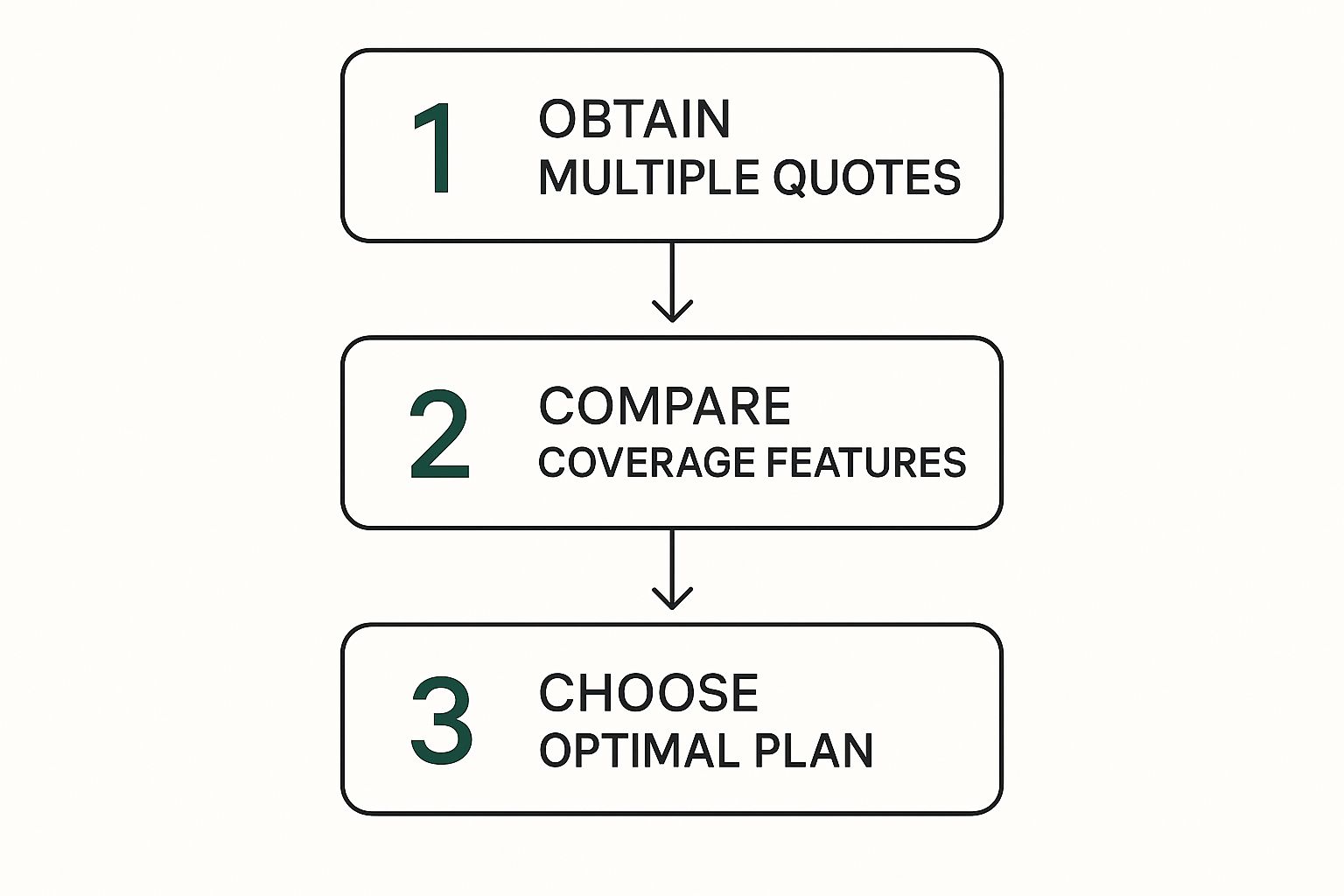
As the graphic shows, a smart switch starts with a solid comparison before you pull the trigger. For an even more detailed breakdown of the process, take a look at our complete guide on how to change insurance providers for more tips and tricks.
Finalizing Your Switch and Notifying Key Parties

You’ve done the hard part—you picked a new insurer and made the switch. Congratulations! But before you pop the champagne, there are just a couple of small administrative tasks to tie up loose ends and make sure your transition is seamless.
First things first, get those new insurance ID cards into your vehicles. Whether they arrive in the mail or you download them digitally, swap them out with the old ones in your glove box right away. It's a tiny detail, but it’s the one that matters if you get pulled over.
Informing Your Lender or Leasing Company
Now for the part you absolutely can’t skip: if you have a loan or lease, you need to tell your finance company about the change. Your contract requires you to keep them in the loop and list them as a loss payee or additional insured. Dropping the ball here could be seen as a breach of your loan agreement, and that can lead to some real headaches you don't want.
Your new insurance agent might offer to notify them for you, which is great, but I always recommend double-checking that it gets done. A quick phone call or email on your end provides peace of mind.
Pro Tip: Don't just fire off a generic email. Make their job easy by including your full name, vehicle details (make, model, and VIN), and your loan account number. This helps them update your file without any confusion that might make them think you've let your coverage lapse.
Here’s a simple template you can use to get the job done in two minutes:
Subject: Updated Insurance Information – [Your Name], Loan #[Your Loan Number]
Dear [Lender Name] Team,
This email is to inform you that I have updated my auto insurance policy for my [Year, Make, Model], VIN [Your VIN].
My new provider is [New Insurance Company Name], and the policy number is [Your New Policy Number]. The new policy is effective as of [Start Date].
Please let me know if you require any additional information from me.
Thank you,
[Your Name][Your Phone Number]
Turn This Switch into a Smart Financial Habit
Finally, let's make sure this effort continues to pay dividends. The biggest mistake people make is getting complacent with their new, lower rate. To make sure you’re always getting the best deal, you have to make shopping around a habit.
Here’s a dead-simple way to do it:
- Open the calendar app on your phone.
- Navigate to the date that is six months before your new policy is scheduled to renew.
- Set an all-day reminder that says: "Shop for Car Insurance."
That’s it. This one small action turns a one-time task into a powerful routine. It puts you in the driver’s seat, giving you plenty of time to compare quotes without the last-minute pressure. By making this a regular financial check-up, you’ll ensure you’re never overpaying for your coverage again.
Answering Your Top Questions About Switching Car Insurance
Changing your car insurance provider is a smart move, but it's natural to have a few questions holding you back. These are the little details that can make you second-guess your decision, but once you have the facts, you can move forward confidently and snag that better rate.
Let's walk through some of the most common concerns I hear from people every day. Getting these cleared up is the key to a painless switch.
Will Shopping for Car Insurance Hurt My Credit Score?
This is probably the number one worry I encounter, and the short answer is no, it won't. You can breathe a sigh of relief.
When you get an insurance quote, carriers run a "soft inquiry" on your credit. This is to get a look at your credit-based insurance score, which helps them set your rate. Unlike the "hard inquiries" that happen when you apply for a new credit card or a mortgage, these soft pulls have zero impact on your FICO or VantageScore credit rating. Lenders can't even see them.
The only scenario where switching could ding your credit is if you left a final bill unpaid with your old insurer and they sent it to collections. Just make sure you tie up all loose ends and settle your account, and your credit will be perfectly fine.
Can I Switch Car Insurance in the Middle of My Policy?
Yes, you absolutely can. You're never locked into a car insurance policy for the full six or twelve months. You have the freedom to change providers at any time—not just when your renewal notice shows up.
When you cancel your old policy, the company is required to send you a prorated refund for any of the premium you've already paid for the months you won't be using.
A word of caution: always ask your current provider if they charge a cancellation fee. Some do. It might be a small flat fee or a percentage of your remaining premium. You'll want to know this number so you can be sure the savings on your new policy still make the switch worthwhile.
What Happens to My No-Claims Discount?
Your no-claims bonus is a big deal—it's your reward for being a safe driver, and you've earned it. The good news is that it’s almost always portable. Think of it as your driving resume; you get to take it with you to your new job.
As you're shopping around, be sure to mention your claims-free history to every potential new insurer. They will verify it with your previous company, but it’s crucial for getting you the best possible rate. Don't let that discount you worked so hard for disappear. In the same way you protect your driving record, businesses must maintain continuous coverage for their digital operations, a concept we dive into in our guide to cyber liability insurance for small business. Protecting your history is just smart practice, on the road and online.
Navigating the insurance world can feel complex, but you don't have to do it alone. The experts at Wexford Insurance Solutions are here to answer all your questions and help you find the best coverage at the most competitive price. https://www.wexfordis.com
 Affordable Commercial Auto Insurance – Save on Your Business CoverageWhat Is Insurance Loss of Use Coverage


