

Your home is more than just a place to live; it's one of your most significant financial investments. Like any valuable asset, it requires consistent, proactive care to maintain its value, ensure its safety, and preserve its structural integrity. Overlooking routine upkeep can lead to predictable yet catastrophic failures, from insidious water damage caused by a slow leak to devastating electrical fires originating from a faulty outlet. These preventable issues often result in expensive, emergency repairs and can lead to complicated insurance claims.
This comprehensive home maintenance checklist is engineered to do more than just guide you through essential tasks; it’s designed to empower you as a prepared and strategic homeowner. We will transform your maintenance routine from a nagging chore into a powerful tool for asset protection. Think of it as a form of self-insurance, where a small investment of time and effort significantly reduces your exposure to major financial loss.
Inside this guide, you’ll find a detailed, actionable plan organized by season and priority. We will break down critical tasks related to your home's exterior, interior, core systems, and safety features. For each item, you'll get:
- Specific action steps and frequencies.
- Estimated time and cost to help you budget effectively.
- Insurance-relevant risks to document for your records.
- Preventive tips to help reduce the likelihood of a claim.
By systematically addressing everything from your HVAC system and roof integrity to plumbing and electrical safety, you not only extend the life of your home’s components but also build a powerful record of responsible ownership. This documentation can be invaluable in the event of a claim. Let's begin building your strategic plan for protecting your investment, enhancing your home's longevity, and securing your peace of mind.
1. HVAC System Inspection and Filter Replacement
Your home's Heating, Ventilation, and Air Conditioning (HVAC) system is its respiratory system, circulating air and maintaining comfortable temperatures. Consistent maintenance is crucial not just for comfort but for efficiency, air quality, and preventing costly breakdowns. This task is a cornerstone of any effective home maintenance checklist.
The core of this maintenance involves replacing air filters every 1 to 3 months. A clogged filter forces the system to work harder, increasing energy consumption and straining components. Beyond filters, an annual professional inspection ensures the system operates at peak performance, identifying potential failures before they happen.
Why It’s a Top Priority
Neglecting your HVAC system can lead to significant consequences, from decreased efficiency driving up utility bills to complete system failure. Poorly maintained systems are a common source of water damage from clogged condensate lines and even fire hazards from faulty electrical components. For instance, homeowners in high-usage regions like Arizona have reported energy savings of up to 25% simply by adhering to a strict maintenance schedule.
Actionable Maintenance Plan
Follow this structured approach to keep your HVAC system in top condition:
- Monthly/Quarterly Filter Change: Check your filter monthly and replace it at least every 90 days. If you have pets or live in a dusty area, monthly replacement is ideal. Set a recurring calendar reminder so you never forget.
- Invest in Quality Filters: Opt for filters with a MERV (Minimum Efficiency Reporting Value) rating between 8 and 13. These capture smaller particles like pollen, dust mites, and pet dander, significantly improving your home’s indoor air quality.
- Annual Professional Servicing: Schedule a professional tune-up before each peak season (spring for AC, fall for heating). Technicians will clean coils, check refrigerant levels, and inspect electrical connections. To ensure your HVAC system is in top shape, consider following a detailed boiler service checklist as a guide for what a comprehensive service should include.
- Keep Records: Document every filter change and professional service visit. These records are often required to keep your manufacturer's warranty valid.
Unexpected mechanical failures can still occur despite diligent maintenance. Having the right coverage provides a crucial financial safety net. Learn more about how equipment breakdown insurance can protect you from these sudden and expensive repairs.
2. Roof Inspection and Gutter Cleaning
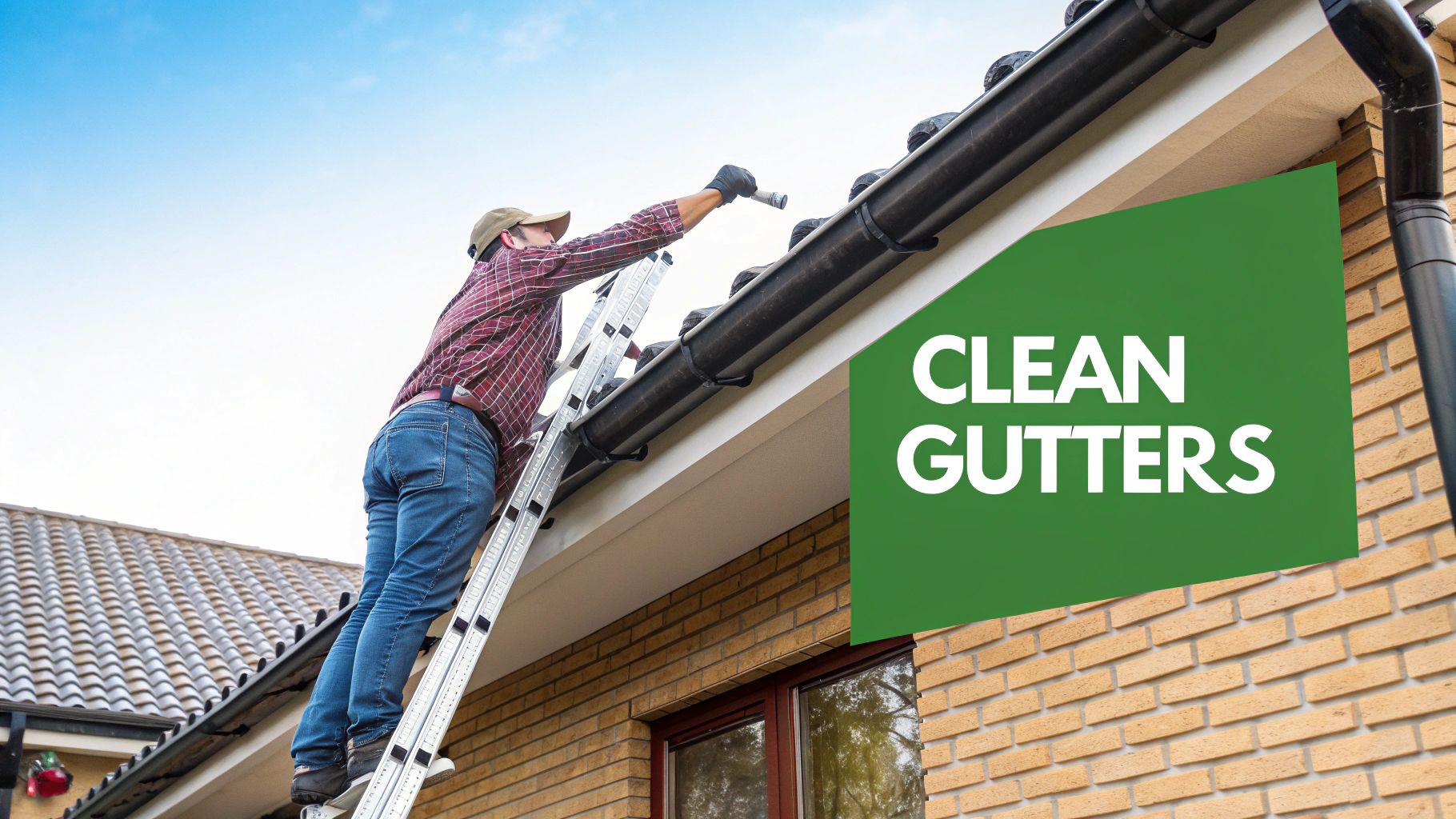
Your roof and gutters are your home's first line of defense against the elements, shielding it from rain, snow, and wind. Regular inspection and cleaning are fundamental to preventing water damage, structural issues, and costly repairs. This proactive task is an essential part of any comprehensive home maintenance checklist, protecting your most valuable asset from the top down.
The core of this task involves a biannual visual inspection for missing or damaged shingles, compromised flashing, and signs of leaks. Simultaneously, clearing gutters of leaves, branches, and other debris ensures that water is effectively channeled away from your home's foundation, walls, and landscaping.
Why It’s a Top Priority
Neglecting your roof and gutters can lead to catastrophic failures. Clogged gutters can cause water to back up under your roof shingles, leading to rot, mold, and interior leaks. In colder climates, this can result in destructive ice dams. A damaged roof leaves your home vulnerable to severe weather, with even a small breach potentially causing thousands in water damage. For example, homeowners in regions with heavy foliage who clean their gutters quarterly report a significant reduction in water-related insurance claims.
Actionable Maintenance Plan
Follow this structured approach to maintain your roof and gutters effectively:
- Biannual Inspections and Cleaning: Schedule inspections and gutter cleaning for both spring and fall. These seasons present ideal times to address any damage from winter storms or prepare for the coming cold. To ensure thoroughness, consider following a comprehensive spring roof inspection checklist as part of your routine.
- Document Everything with Photos: During your inspections, take clear photographs of your roof's condition, especially any areas of concern. This visual record is invaluable for monitoring changes over time and is crucial evidence when filing an insurance claim.
- Address Minor Issues Immediately: Don't delay small repairs. A single loose shingle or a small crack in the flashing is much easier and cheaper to fix now than the extensive water damage it could cause later.
- Prioritize Safety: If your roof is steep or you are not comfortable working at heights, hire a licensed and insured professional. The cost of a professional service is a small price to pay for preventing a serious injury.
Even with meticulous maintenance, severe weather like hail can cause unexpected damage. Understanding your policy is key. Find out more about how to navigate a hail damage roof insurance claim to ensure you are fully prepared.
3. Plumbing System Check for Leaks and Water Pressure
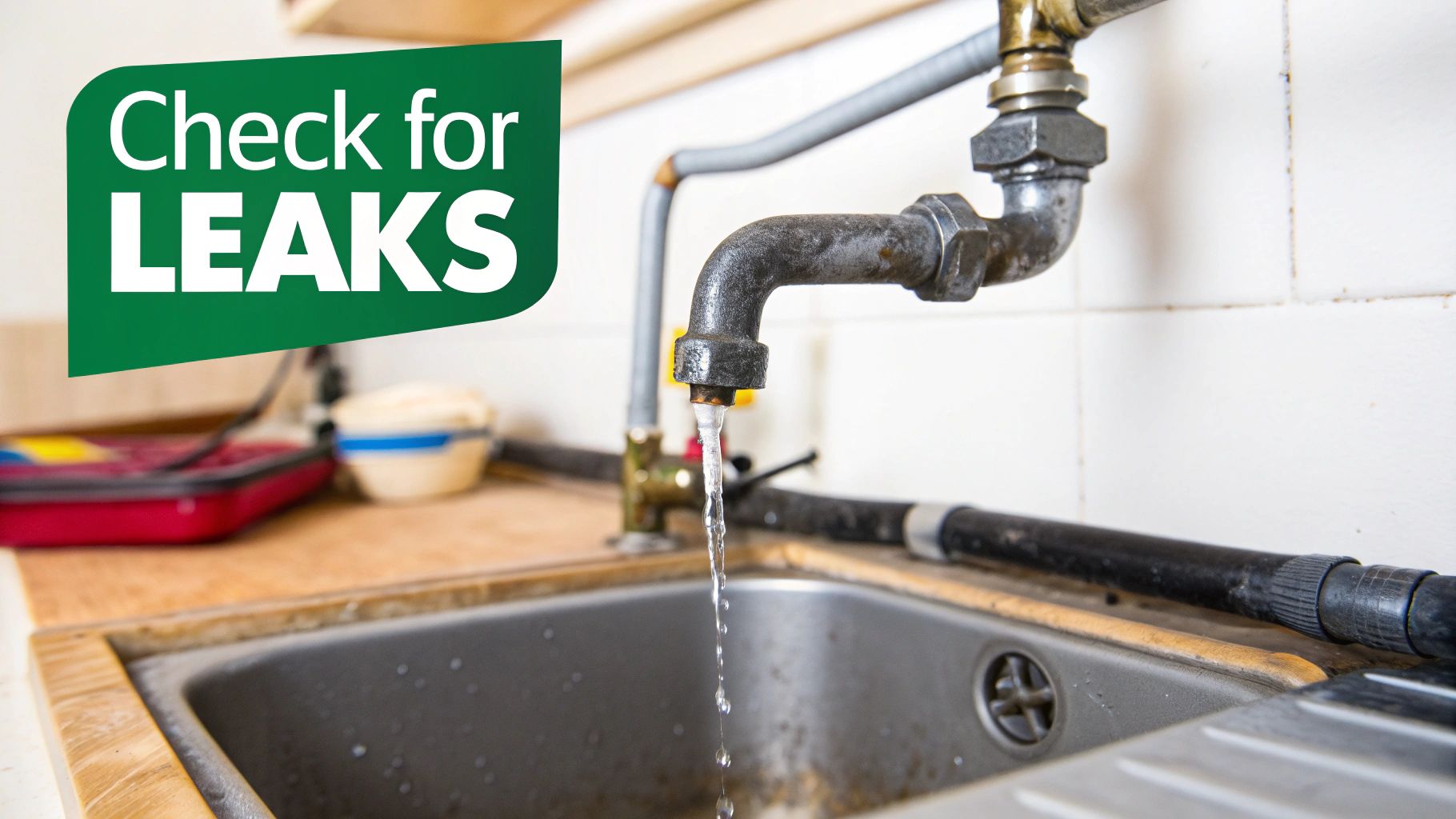
Your home's plumbing is its circulatory system, delivering clean water and removing waste. Unchecked, even a minor leak can lead to catastrophic water damage, mold growth, and wasted resources. A systematic inspection of your plumbing for leaks and pressure issues is a non-negotiable part of any comprehensive home maintenance checklist.
This essential task involves checking all visible pipes, fixtures, and connections for drips, corrosion, or signs of moisture. Key areas include under sinks, around toilets, and near water heaters. According to the EPA, household leaks can waste nearly 900 billion gallons of water annually nationwide, making this check crucial for both your wallet and the environment.
Why It’s a Top Priority
Neglecting plumbing issues is one of the fastest ways to incur significant property damage. A slow, hidden leak can saturate drywall, rot structural wood, and create a breeding ground for toxic mold. Sudden failures, like a burst pipe, can flood a home in minutes, leading to extensive and costly repairs. Monitoring your water bill for unexplained spikes is a simple way to catch these problems early, as it's often the first sign of a hidden leak.
Actionable Maintenance Plan
Follow this structured approach to keep your plumbing system secure and efficient:
- Quarterly Visual Inspections: Every three months, inspect under all sinks, behind toilets, and around your water heater and washing machine. Look for active drips, water stains, or mineral deposits on pipes, which indicate a slow leak.
- Test for Silent Leaks: Use the "water meter test" by recording the reading, not using any water for two hours, and checking again. If the reading has changed, you have a leak. For toilets, add a few drops of food coloring to the tank; if color appears in the bowl without flushing, the flapper needs replacement.
- Check Water Pressure: Purchase an inexpensive pressure gauge that screws onto a hose bib. Ideal residential water pressure is between 40-60 PSI. Pressure above 80 PSI can stress pipes and fixtures, so install a pressure regulator if needed.
- Document and Report: Take clear photos of any signs of leaks, corrosion, or pressure issues. This documentation is invaluable for maintenance records and potential insurance claims.
Water damage from a burst pipe can be devastating, and understanding your coverage is critical. Get clarity on what your policy includes by learning more about whether homeowners insurance covers burst pipes before you face an emergency.
4. Exterior Sealing, Caulking, and Weatherstripping
Your home’s exterior is its first line of defense against the elements, pests, and energy loss. Gaps and cracks around windows, doors, siding, and foundation penetrations create vulnerabilities that can lead to significant problems. Diligent maintenance of caulking, sealants, and weatherstripping is a critical component of any comprehensive home maintenance checklist, protecting your home’s structural integrity and efficiency.
This task involves regularly inspecting and repairing the seals that make up your home’s building envelope. Over time, materials like caulk and weatherstripping break down due to sun exposure, temperature fluctuations, and moisture. Maintaining these seals prevents water intrusion, air leaks, and unwanted pest entry, preserving both comfort and property value.
Why It’s a Top Priority
Neglected seals can lead to a cascade of expensive issues, from hidden water damage and mold growth to rampant pest infestations. The U.S. Department of Energy reports that effective sealing and weatherstripping can reduce heating and cooling costs by an average of 15%. For instance, homeowners in wet climates have reported significant reductions in water-related damage claims after a thorough recaulking effort, while homes with poor weatherstripping can see hundreds of dollars in annual energy waste.
Actionable Maintenance Plan
Follow this structured approach to maintain your home's protective envelope:
- Semi-Annual Inspections: Walk around your home’s exterior each spring and fall. Look for cracked, shrinking, or peeling caulk around windows, doors, and where different materials meet. Inside, check for drafts or light peeking through door and window frames.
- Use the Right Materials: Apply high-quality, paintable caulk for visible exterior areas to match your home’s color. Use 100% silicone caulk in high-moisture areas like around vents and faucets for its superior water resistance and flexibility.
- Proper Application Technique: Always remove old, failed caulk completely before applying a new bead to ensure proper adhesion. Use a quality caulk gun for a smooth, consistent application. Perform this task during dry, mild weather to allow the sealant to cure correctly.
- Weatherstripping Refresh: Check weatherstripping on doors and windows for compression and tears. Replace worn-out foam strips, which are less durable, with higher-quality rubber or vinyl options that provide a longer-lasting seal. Ensure the new stripping doesn't interfere with the proper closure of the door or window.
5. Electrical System Inspection and Outlet Testing
Your home's electrical system is its central nervous system, powering everything from your lights to your appliances. Routine inspection and testing are fundamental to ensuring safety, preventing fire hazards, and maintaining the functionality of modern electronics. This essential task on your home maintenance checklist safeguards your property and family from significant, yet often preventable, risks.
The core of this maintenance involves testing safety devices like Ground Fault Circuit Interrupters (GFCIs) and having a licensed professional periodically inspect your main electrical panel and wiring. This proactive approach identifies issues like outdated components, faulty wiring, or overloaded circuits before they can escalate into catastrophic failures.
Why It’s a Top Priority
A neglected electrical system is a silent but severe hazard. According to the National Fire Protection Association (NFPA), electrical failures are responsible for approximately 51,000 home fires annually. Homes over 40 years old are particularly at risk, often requiring panel upgrades from 100 to 200 amps to handle modern electrical loads. Furthermore, functioning GFCI outlets are critical; they are credited with reducing electrocution deaths by 99% by quickly shutting off power when a fault is detected.
Actionable Maintenance Plan
Follow this structured approach to keep your electrical system safe and reliable:
- Monthly GFCI Testing: Test every GFCI outlet in your home monthly. Simply press the "TEST" button to cut power and then the "RESET" button to restore it. If it doesn't trip, replace the outlet immediately.
- Professional Annual Inspection: Hire a licensed electrician for a comprehensive annual inspection. They should check your electrical panel for signs of overheating, test breakers, and verify proper grounding. This is especially crucial for older homes.
- Avoid Overloading Circuits: Never use extension cords as a permanent wiring solution. Be mindful of how many high-draw appliances are plugged into a single circuit to prevent overheating and breaker trips.
- Document All Work: Keep detailed records of all electrical inspections, repairs, and upgrades. This documentation is vital for insurance purposes and can be required to maintain your homeowner's policy validity.
Understanding the direct link between electrical maintenance and fire prevention is crucial. Learn more about how to protect your home from electrical fires and implement other key safety measures.
6. Foundation and Basement Wall Crack Inspection
Your home's foundation is its literal bedrock, supporting the entire structure above it. Regularly inspecting your foundation and basement walls for cracks, water intrusion, and other signs of distress is a critical part of any home maintenance checklist. This proactive monitoring helps catch minor issues before they escalate into catastrophic and expensive structural failures.
The core of this task involves a visual examination of basement walls and the exterior foundation. You're looking for cracks, moisture, efflorescence (a white, powdery mineral deposit left by evaporating water), and any signs of bulging or shifting. Differentiating between minor settlement cracks and serious structural issues is key to knowing when to call a professional.
Why It’s a Top Priority
Foundation problems are among the most expensive home repairs, often costing tens of thousands of dollars. Neglect can lead to severe structural instability, widespread water damage, and dangerous mold growth. For instance, homes with poor exterior drainage experience up to 10 times more foundation issues than those with proper grading and gutter systems. In regions with expansive clay soils, like Texas and Colorado, foundation movement is a common and costly problem if not managed.
Actionable Maintenance Plan
Follow this structured approach to protect your home's foundation:
- Semi-Annual Visual Inspection: At least twice a year, walk the perimeter of your basement and exterior foundation. Photograph any cracks you find and document their location and size.
- Monitor Crack Growth: Mark the ends of any small cracks with a pencil and date it. This creates a simple but effective way to track whether a crack is actively growing, which signals a potential ongoing issue.
- Distinguish Crack Types: Learn to identify different cracks. Hairline vertical or diagonal cracks are often from normal concrete curing or minor settlement. Horizontal cracks, stair-step cracks in block walls, or any crack wider than 1/4 inch are red flags that warrant a professional structural engineer's assessment.
- Manage Water Runoff: Ensure your gutters are clean and downspouts extend at least 4-6 feet away from the foundation. The ground around your house should have a clear slope, dropping about six inches over the first ten feet, to direct water away.
Foundation issues can be complex, and insurance coverage is often limited. Understanding what your policy covers is essential. Learn more about whether homeowners insurance covers foundation repair to ensure you are adequately protected.
7. Appliance Cleaning and Maintenance Service
Your major household appliances, from the refrigerator to the clothes dryer, are the workhorses of your home, running daily to make life more convenient. Consistent cleaning and maintenance are essential not just for their longevity and efficiency, but for the safety of your home. This task is a critical component of any comprehensive home maintenance checklist.
The core of this maintenance involves regular cleaning of filters, coils, and vents, as well as inspecting hoses and connections. A clean appliance operates more efficiently, consuming less energy and water. An annual professional check-up can identify wear and tear on complex components, preventing unexpected failures and costly replacements.
Why It’s a Top Priority
Neglecting appliance maintenance can lead to serious consequences, including devastating house fires and significant water damage. According to the U.S. Fire Administration, clogged dryer vents are responsible for over 2,900 home fires each year, a completely preventable disaster. Furthermore, a burst washing machine hose can release hundreds of gallons of water per hour. Beyond safety, well-maintained refrigerators with clean coils can use up to 25% less energy, directly lowering your utility bills.
Actionable Maintenance Plan
Follow this structured approach to keep your major appliances in optimal condition:
- Dryer Vent Cleaning: Clean the lint trap after every use and deep clean the entire vent duct every 3 to 6 months to prevent a critical fire hazard.
- Refrigerator and Dishwasher Care: Clean your refrigerator's condenser coils annually to improve efficiency. Replace its water filter every 6 months. Run a commercial cleaning cycle in your dishwasher monthly to prevent buildup and clogs.
- Washing Machine Inspection: Annually inspect the water supply hoses for any signs of bulging, cracking, or leaking. Consider replacing standard rubber hoses with braided stainless steel ones for superior durability.
- Keep Records: Document all maintenance tasks and professional service visits. This documentation is often necessary to maintain the validity of your manufacturer's warranty and can be crucial during an insurance claim.
Even the best-maintained appliances can suffer from unforeseen mechanical or electrical failures. These sudden breakdowns can be disruptive and expensive. Understanding how equipment breakdown insurance can protect you offers a vital layer of financial security against these unexpected repair costs.
8. Deck and Patio Surface Inspection and Maintenance
Your deck, patio, and walkways are more than just exterior features; they are functional extensions of your living space. Proper inspection and maintenance are essential for safety, longevity, and preserving your home's curb appeal. This task is a critical component of any comprehensive home maintenance checklist, protecting against both structural failures and liability risks.
The core of this maintenance involves regular cleaning and sealing, alongside structural checks for potential hazards. Debris, moisture, and UV exposure can quickly degrade surfaces, leading to rot, cracks, and unstable structures. An annual deep inspection prevents minor issues from becoming dangerous and expensive repairs.
Why It’s a Top Priority
A neglected deck or patio is a significant safety and financial liability. Loose railings, rotting boards, or uneven pavers can cause serious injuries, leading to potential insurance claims. For example, building codes often require railings to withstand 200 pounds of force, a standard that deteriorates without upkeep. Water damage is another major concern; an improperly sealed deck can channel water toward your home's foundation, causing far more extensive problems. A well-maintained wooden deck can last over 15 years, while an unsealed one may show significant rot in as few as five.
Actionable Maintenance Plan
Follow this structured approach to keep your outdoor surfaces safe and attractive:
- Semi-Annual Cleaning: Clean your deck and patio thoroughly at least twice a year, typically in the spring and fall. Use a mild detergent and a soft-bristle brush to remove dirt, mildew, and algae. Promptly sweep away leaves and debris to prevent moisture buildup and staining.
- Regular Sealing and Staining: For wood decks, apply a new coat of sealer or stain every 2-3 years, depending on your climate and the deck’s exposure to the elements. This protective layer is your best defense against moisture intrusion and UV damage.
- Structural Integrity Check: Annually, inspect all structural components. Check for wobbly railings, loose or corroded fasteners, and split or rotting wood. Pay close attention to the ledger board, where the deck attaches to your house, as this is a common point of failure.
- Address Repairs Immediately: Don't delay repairs. Use a wood preservative to treat any signs of rot immediately to stop it from spreading. Replace cracked pavers or damaged boards to eliminate tripping hazards. Ensure the patio surface slopes slightly away from your house (about 1/8 inch per foot) to promote proper drainage.
9. Attic Ventilation and Insulation Inspection
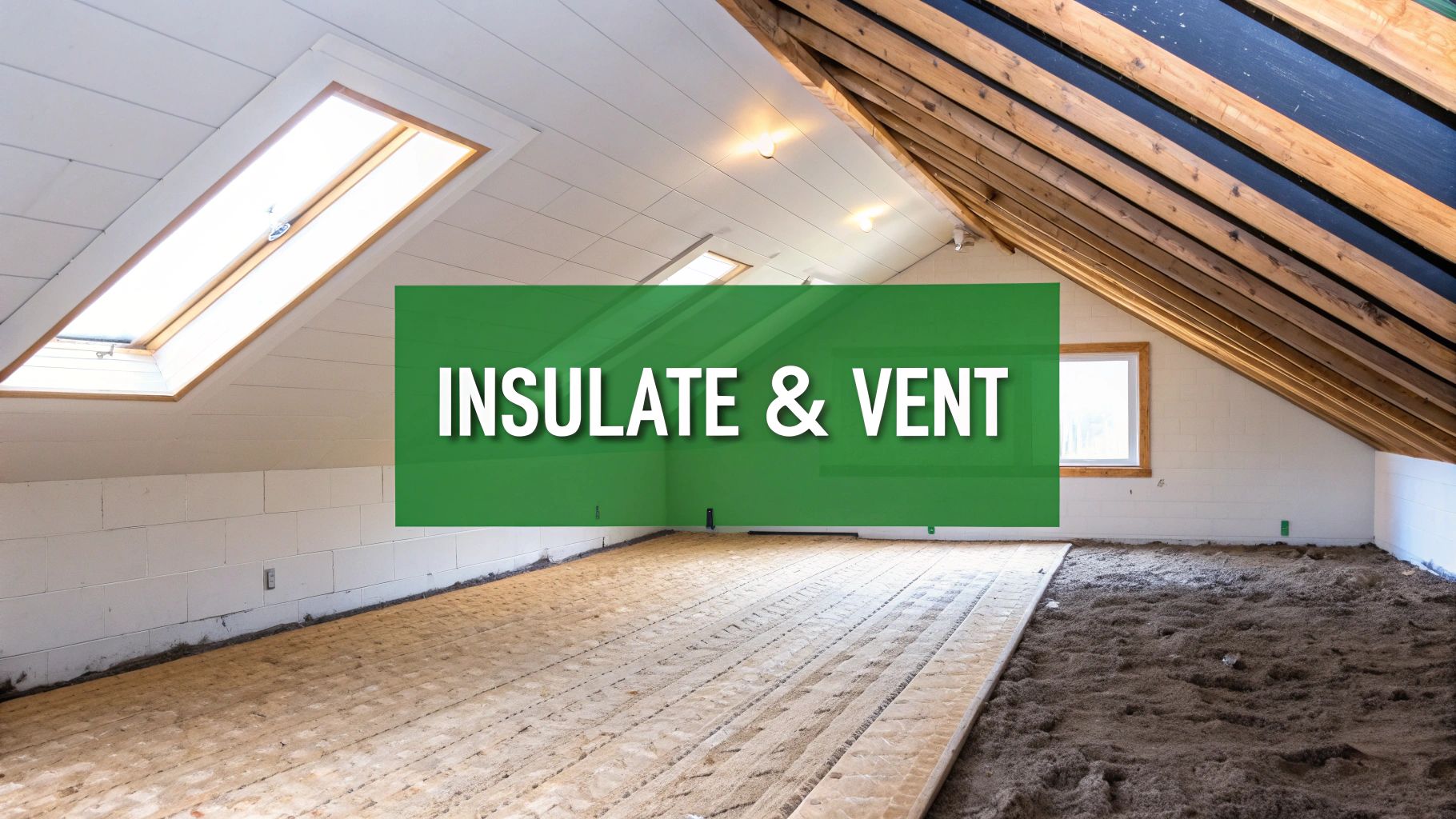
Your attic acts as a crucial thermal buffer between your living space and the outdoors. Properly managing this space through regular ventilation and insulation inspections is essential for energy efficiency, structural integrity, and overall home health. This task is a non-negotiable part of a comprehensive home maintenance checklist, protecting your home from extreme temperatures and moisture damage.
The core of this task involves a biannual check of your attic’s key components. This means ensuring soffit and ridge vents are clear of debris for proper airflow, measuring insulation depth to confirm it meets regional R-value recommendations, and scanning for any signs of moisture, pests, or structural issues. A well-maintained attic system keeps your home cooler in the summer and warmer in the winter.
Why It’s a Top Priority
Neglecting your attic can lead to severe and expensive problems. Inadequate insulation can cause up to 40% of a home's heating and cooling energy loss, directly inflating your utility bills. Blocked vents trap hot, moist air, which can lead to condensation, mold growth, and wood rot in the roof decking. In winter, this trapped heat can cause ice dams to form on your roof, resulting in significant water damage to your ceilings and walls.
Actionable Maintenance Plan
Follow this structured approach to keep your attic in optimal condition and prevent costly claims:
- Perform a Biannual Visual Inspection: At least twice a year (spring and fall), use a bright LED flashlight to inspect your attic. Wear protective gear, including a mask, goggles, and gloves. Always walk on joists or dedicated boards to avoid stepping through the ceiling drywall.
- Check Insulation Levels: Measure your insulation's depth. Depending on your climate zone, you should aim for an R-value between R-38 and R-60. If insulation is compressed, uneven, or below recommended levels, consider adding more to improve efficiency.
- Verify Airflow: Ensure all soffit, ridge, and gable vents are clear of insulation, nests, and debris. Proper ventilation follows a simple rule: at least 1 square foot of net-free vent area for every 150 square feet of attic floor space.
- Look for Moisture and Pests: Scan for water stains on the underside of the roof sheathing, damp or moldy insulation, or signs of pest droppings and nests. Addressing these issues immediately can prevent major structural repairs and associated insurance claims.
10. Exterior Paint and Siding Condition Assessment
Your home’s exterior paint and siding are its first line of defense against the elements, acting as a crucial shield for its structural integrity. A well-maintained exterior not only boosts curb appeal but also prevents moisture intrusion, rot, and pest infestations. Regularly assessing its condition is a fundamental part of a comprehensive home maintenance checklist, safeguarding your home’s value and preventing extensive, expensive repairs down the line.
The core of this task involves a visual inspection for peeling paint, cracking, wood rot, or gaps in siding. Addressing these minor issues promptly prevents them from escalating into major structural problems. A fresh coat of paint every 7 to 10 years is more than a cosmetic update; it's a protective renewal that seals vulnerabilities.
Why It’s a Top Priority
Neglecting your home's exterior can lead to devastating consequences. Water seeping through cracked paint or siding gaps can cause wood rot, compromising the structural frame and leading to repairs that can cost thousands. For example, proactive wood rot prevention can save an average of over $2,000 in structural repairs. Furthermore, a well-maintained exterior is a significant factor in property value; homes with pristine paint and siding often maintain their value up to 15% better than those with visible exterior wear.
Actionable Maintenance Plan
Follow this structured approach to protect your home’s exterior:
- Twice-Yearly Inspections: In the spring and fall, walk the perimeter of your home. Look for peeling or bubbling paint, faded areas, and signs of mildew. Check siding for cracks, warping, or loose boards.
- Address Minor Flaws Immediately: Don't wait for small issues to worsen. Scrape, sand, prime, and repaint small peeling areas as soon as you spot them to prevent moisture from getting underneath.
- Schedule a Full Repaint: Plan to repaint your home's exterior every 7-10 years, or more frequently in harsh climates. Always use a high-quality, climate-appropriate exterior paint and caulk all seams and gaps before starting.
- Prepare Surfaces Properly: Before a full repaint, power wash the siding to remove dirt, mildew, and loose paint. Ensure the surface is completely dry before applying primer or paint for maximum adhesion and longevity.
- Keep Detailed Records: Document all inspections, touch-ups, and full repainting projects, including paint colors and brands used. This information is valuable for future maintenance and can be a key selling point if you decide to move.
10-Point Home Maintenance Checklist Comparison
| Item | 🔄 Implementation Complexity | ⚡ Resource Requirements (time / cost / tools) | ⭐ Expected Outcomes | 📊 Key Advantages | 💡 Ideal Use Cases |
|---|---|---|---|---|---|
| HVAC System Inspection and Filter Replacement | Low for routine filter changes; Moderate for annual professional servicing | Monthly checks; filters $10–50; pro service $150–300; basic tools for airflow checks | Improves IAQ; +15–20% efficiency; extends system life 5–10 yrs; saves ~$200–400/yr | Reduces allergens; lowers energy use; prevents emergency repairs | HVAC-dependent regions, allergy households, Energy Star maintenance |
| Roof Inspection and Gutter Cleaning | Moderate (working at heights; safety risk) | 2–4 hr per cleaning; pro $150–400; ladder, safety gear | Prevents leaks/foundation damage; extends roof life 5–15 yrs; avoids large repair costs | Improves drainage; preserves property value; reduces water damage claims | Heavy-rain/hurricane areas; post-storm inspections; spring/fall maintenance |
| Plumbing System Check for Leaks and Water Pressure | Moderate (hidden leaks may need tools) | Monthly visual; pressure gauge for testing; pro $100–200; repair costs vary widely | Detects hidden leaks; reduces water waste; lowers bills 10–20% | Prevents mold, structural damage, and high water bills | Older homes, unexplained bill increases, winterization prep |
| Exterior Sealing, Caulking, and Weatherstripping | Low–Moderate (DIY feasible; quality matters) | Materials $200–500; pro $100–300 for whole-home; caulk gun, sealants | Reduces drafts/water intrusion; saves 10–20% on energy; blocks pest entry | Cost-effective preventive measure; improves comfort; reduces noise | Drafty windows/doors, wet climates, energy-efficiency upgrades |
| Electrical System Inspection and Outlet Testing | Moderate–High (safety, code knowledge required) | Monthly GFCI tests; pro inspection $200–400; specialized tools for diagnosis | Prevents electrical fires; ensures safe circuits and code compliance | Reduces fire/shock risk; may lower insurance premiums; supports new appliances | Older homes, renovations, homes with children or added loads |
| Foundation and Basement Wall Crack Inspection | Moderate to High (assessment easy; repairs can be major) | Monthly visual; pro inspection $100–200; engineer $300–500 for structural issues | Early detection prevents catastrophic failure and flooding | Protects property value; enables targeted drainage fixes | Homes with poor drainage, expansive soils, after heavy rain or settling |
| Appliance Cleaning and Maintenance Service | Low (DIY) to Moderate (complex appliances) | Monthly/quarterly cleaning; supplies $20–100; pro $150–300 per appliance | Extends appliance life 3–5 yrs; reduces energy use 15–30%; prevents breakdowns | Maintains warranties; reduces fire risk (e.g., dryer vents) | High-use households, pre-warranty expiry, energy-saving efforts |
| Deck and Patio Surface Inspection and Maintenance | Moderate (structural checks; labor-intensive) | Quarterly/biannual cleaning; sealing $300–800; pro treatments $300–500 | Extends deck life 10–15 yrs; prevents falls and rot; reduces liability | Improves safety and curb appeal; cheaper than full replacement | Homes with outdoor living spaces, wet climates, preparing to sell |
| Attic Ventilation and Insulation Inspection | Moderate (access/comfort issues; possible upgrades) | Biannual visual; energy audit annually; insulation upgrades $1,500–3,000; vents $500–1,500 | Lowers energy use 15–20%; prevents moisture/ice dams; extends roof life | Improves comfort, reduces HVAC load, prevents mold | Cold climates (ice dams), homes with low R-value, moisture problems |
| Exterior Paint and Siding Condition Assessment | Moderate (requires ladders; possible repainting) | Quarterly visual; touch-ups $200–500; full repaint $3,000–8,000 | Prevents water intrusion; extends siding life 10+ yrs; maintains curb appeal | Protects structure, prevents costly wood replacement | Wood-sided homes, prepping for sale, high-UV or coastal climates |
Partner with Wexford for Complete Home Protection
Navigating the complexities of homeownership can feel like a perpetual balancing act. This comprehensive home maintenance checklist has provided a structured, season-by-season roadmap to transform that challenge into a manageable and empowering process. We've moved beyond a simple to-do list, offering a strategic framework for safeguarding your most significant asset. From the seasonal demands of HVAC servicing and gutter cleaning to the foundational integrity checks of your basement walls and electrical systems, each task is a crucial investment in your home's longevity, safety, and value.
The core takeaway is that proactive maintenance is not merely about fixing what's broken; it's about preventing problems before they start. By diligently inspecting your roof, sealing exterior gaps, maintaining appliances, and assessing your attic's insulation, you are actively mitigating risks that could otherwise lead to catastrophic and costly damage. This systematic approach is the first and most critical line of defense against water damage, structural failures, fire hazards, and weather-related incidents.
From Proactive Maintenance to Proactive Protection
The true power of your efforts, however, is fully realized when your physical maintenance is paired with robust financial protection. Documenting your work is a game-changer. Think of it as building a case for yourself as a responsible homeowner. When you take a dated photo of your freshly cleaned gutters or upload a receipt from your annual HVAC inspection, you are creating an invaluable digital record.
This documentation serves a vital purpose: it demonstrates diligence and can significantly streamline the insurance claims process. In the unfortunate event of a claim, this evidence can substantiate that a loss was not due to negligence, potentially accelerating your settlement and ensuring you receive the full benefit you are entitled to. It transforms your maintenance from a series of chores into a strategic risk management practice.
Actionable Next Steps: Fortify Your Financial Foundation
Mastering your home maintenance checklist is a significant accomplishment. Now, take the next logical step to ensure your hard work is fully protected. The value of a meticulously maintained home can be quickly undermined by inadequate or misaligned insurance coverage. This is where a strategic partnership becomes essential.
Here’s how to translate your maintenance efforts into enhanced protection:
- Organize Your Records: Gather all receipts, invoices, and photos related to recent maintenance, such as your roof inspection, plumbing checks, or electrical system servicing.
- Utilize a Secure Portal: Use the Wexford client portal to securely upload these documents. This creates a centralized, accessible archive that serves as irrefutable proof of your home's condition and your proactive upkeep.
- Schedule a Policy Review: A home is not a static asset; it changes, as do your needs and the risks you face. An annual policy review is non-negotiable. It ensures your coverage limits, endorsements, and deductibles are still appropriate for your property's current value and your family's financial situation.
By integrating these steps, you build a comprehensive shield around your home, one that combines physical integrity with financial security. This dual approach provides a level of peace of mind that maintenance or insurance alone cannot offer. Your home is more than just a structure; it's the center of your world. Protecting it with this level of detail and foresight is one of the most important commitments you can make.
Don't let your diligent home maintenance be undermined by a generic insurance policy. Partner with Wexford Insurance Solutions to align your proactive efforts with intelligent, tailored coverage and expert claims advocacy. Visit us at Wexford Insurance Solutions to schedule a complimentary policy review and discover how to build a truly comprehensive protection strategy for your home.


