

The moments after an accident or discovering property damage are a blur.It's easy to feel overwhelmed, but the first few minutes are critical. Your immediate actions should focus on three things: safety, calling for help, and documenting everything. In this situation, your smartphone is your best friend—it captures the undeniable proof you’ll rely on later.
Your First Moves After an Incident

When something goes wrong, your mind starts racing. The trick is to take a deep breath and focus on what’s most important for your safety and for building a strong insurance claim. What you do right away sets the foundation for the entire process.
First things first: make sure everyone is okay. If anyone is injured in a car crash, or if there's an immediate hazard like a fire or major flood at your home, call 911 immediately. Nothing is more important than your well-being.
Start Documenting the Scene
Once you've confirmed everyone is safe, it’s time to switch into investigator mode. Grab your phone and take more photos and videos than you think you’ll ever need. You want to capture the entire scene from every conceivable angle.
Let’s say you’ve been in a minor car accident. Don't just get a close-up of the dent. Take wide-angle shots that show the position of both cars, nearby traffic signs, weather conditions, and any skid marks. Then, get detailed photos of the other driver's license plate, insurance card, and driver's license. This collection of images paints a clear, objective picture for the adjuster.
The same logic applies to home incidents. If you walk into your basement and find a burst pipe has flooded everything, document the source of the leak, the high-water mark on the walls, and every single item that’s been damaged. A slow, narrated video walkthrough can be incredibly powerful, showing the full scope of the damage before you start any cleanup.
Crucial Tip: Never admit fault at the scene of an accident. When talking to the other driver or property owner, stick to the objective facts. A simple, well-intentioned "I'm sorry" can easily be twisted into an admission of guilt, which can cause major headaches for your claim down the road.
Protect Your Property from Further Harm
Your final immediate task is to take reasonable steps to prevent the situation from getting worse. This isn't about starting full-blown repairs; it's about temporary, protective measures.
For example, you could tape a plastic bag over a broken car window to keep rain out or throw a tarp over a damaged section of your roof after a storm. Taking these small steps shows your insurance company that you're acting responsibly to mitigate the loss. It’s also a good time to remember what your policy covers, such as how loss of use insurance can cover temporary housing if your home is unlivable.
To keep these initial actions straight during a stressful time, here is a quick reference guide.
Immediate Action Checklist
This table breaks down what to do in the first 30 minutes after an incident.
| Action Item | Why It's Important |
|---|---|
| Check for Injuries | Your top priority is always the health and safety of everyone involved. |
| Call Emergency Services | If there are injuries or immediate danger, calling 911 is essential for medical and legal documentation. |
| Move to a Safe Location | If possible, move vehicles out of traffic or distance yourself from hazards like fire or flooding. |
| Take Photos & Videos | Visual evidence is your strongest tool. Capture everything from multiple angles before anything is moved. |
| Exchange Information | Get names, contact info, insurance details, and license plate numbers from any other parties involved. |
| Mitigate Further Damage | Take small, temporary steps (like using a tarp) to prevent the problem from worsening. |
Keeping this checklist in mind can help bring order to a chaotic situation, ensuring you don't miss a critical step when it matters most.
Building an Undeniable Evidence File
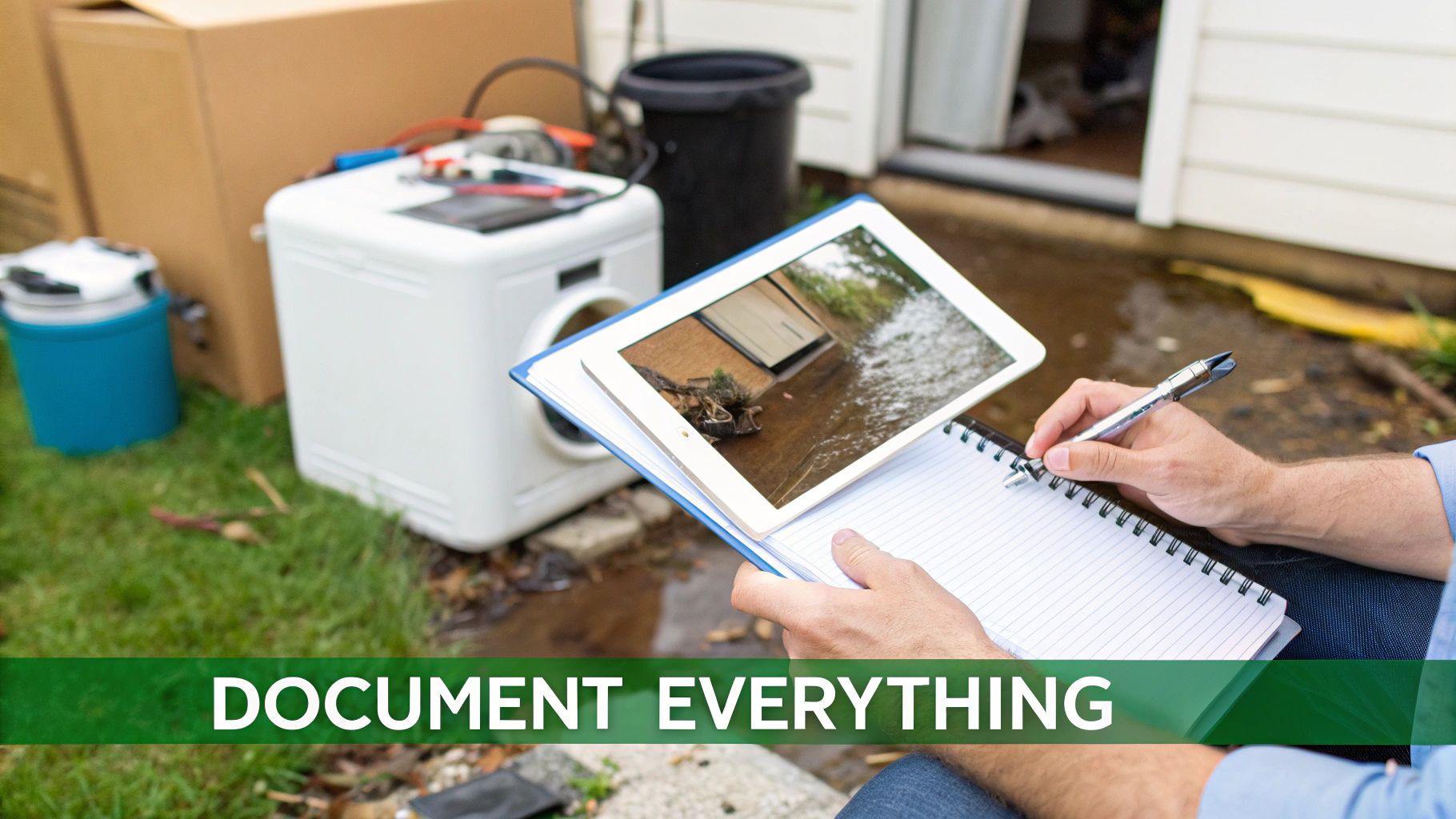
When you're filing an insurance claim, solid proof is your best friend. A few quick snapshots are a start, but if you want to build a truly undeniable case, you need to go further. Your mission is to create a detailed record that leaves absolutely no doubt about the extent of your loss.
Start thinking like a claims investigator. Get photos from every possible angle—wide shots to show the whole scene and close-ups that zero in on specific damage. Before you throw anything away, make sure you snap a picture of the serial numbers on any appliances or electronics. It’s a small detail that can make a big difference.
Go Beyond Still Photos
Pictures are essential, but video often tells a much more compelling story. A slow video walkthrough of a damaged room, with you narrating what happened and what you're seeing, can give the adjuster a powerful, real-world perspective.
Video becomes absolutely critical when you're dealing with functional damage. Let's say a power surge zapped your high-end refrigerator. It might look perfectly fine from the outside, but it won't get cold. A quick video showing the fridge plugged in but not running provides definitive proof that a simple picture could never capture. This kind of evidence stops potential arguments about whether an item was truly broken or just had a cosmetic scratch.
Create a Detailed Inventory
A thorough list of every single item that was damaged or lost is non-negotiable, particularly for property claims. I know it can feel like a massive chore, but this step directly impacts your final settlement.
For every item on your list, you’ll want to include:
- Item Description: Be specific. Note the brand, model, and any unique features.
- Original Purchase Price: Dig up receipts or check old credit card statements if you can.
- Age of the Item: If you can't find the purchase date, an honest estimate will work.
- Estimated Replacement Cost: A quick online search for a similar, new item will give you a current price.
If your basement flooded, this means you’re listing every single book, storage bin, and piece of furniture that was ruined. For something more specific, like storm damage, you can find more tips in our guide to handling a hail damage roof insurance claim. Taking the time to be this detailed makes it much easier for an adjuster to process your claim fairly and without unnecessary delays.
Key Takeaway: Your evidence file needs to tell the complete story of your loss. Meticulous documentation is the single best way to ensure you receive a fair settlement.
Getting in Touch With Your Insurer to Start the Claim

Okay, you've got your notes and photos together. Now it's time to make the call and officially get the ball rolling. This first contact is a big deal—it really sets the stage for how smoothly everything else will go. Being prepared can turn a potentially stressful call into a straightforward, productive step forward.
Before you even pick up the phone, grab your policy number. You'll also want to have a quick, clear summary of what happened ready to go. We're talking just the essential facts: date, time, and a one-sentence description of the incident. This isn't the moment for the full, detailed story; it's about giving the representative the core info they need to open your file.
If you have an independent agent, I always recommend calling them first. They're your advocate and can give you priceless advice or even start the claim for you, which is a huge help right from the get-go.
Your Questions for the Representative
That first call is your best opportunity to understand what to expect. Don't hang up until you have a clear picture of the road ahead. I've seen too many people get frustrated later simply because they didn't ask the right questions upfront.
Here’s a quick checklist of what you absolutely need to ask:
- What's my claim number? This is your new magic number. Write it down and keep it handy for every single follow-up.
- Who is my adjuster, and when should I expect their call? Getting a timeline helps manage your expectations and reduces the anxiety of waiting.
- Can you confirm my deductible for this incident? You need to know exactly how much you'll be paying out of pocket. No surprises.
- Is there anything I need to do right now? Sometimes they have specific instructions, like using preferred vendors for temporary repairs to prevent more damage.
The process has become a massive operation. Globally, the insurance claims services market is valued at $209.28 billion, which shows just how much is invested in trying to make this process work. You can find more details about the global insurance claims services market on thebusinessresearchcompany.com.
Pro Tip: I tell all my clients this: start a claim journal. It can be a simple notebook or a file on your computer. Log every call—date, time, the person you spoke with, and what was said. This simple habit will be your best friend if any confusion arises down the line.
Of course, knowing what your policy actually says is half the battle. If you're staring at your documents and the jargon feels overwhelming, our guide on how to read an insurance policy can help you make sense of the terms that will directly impact your claim.
Working With the Insurance Adjuster
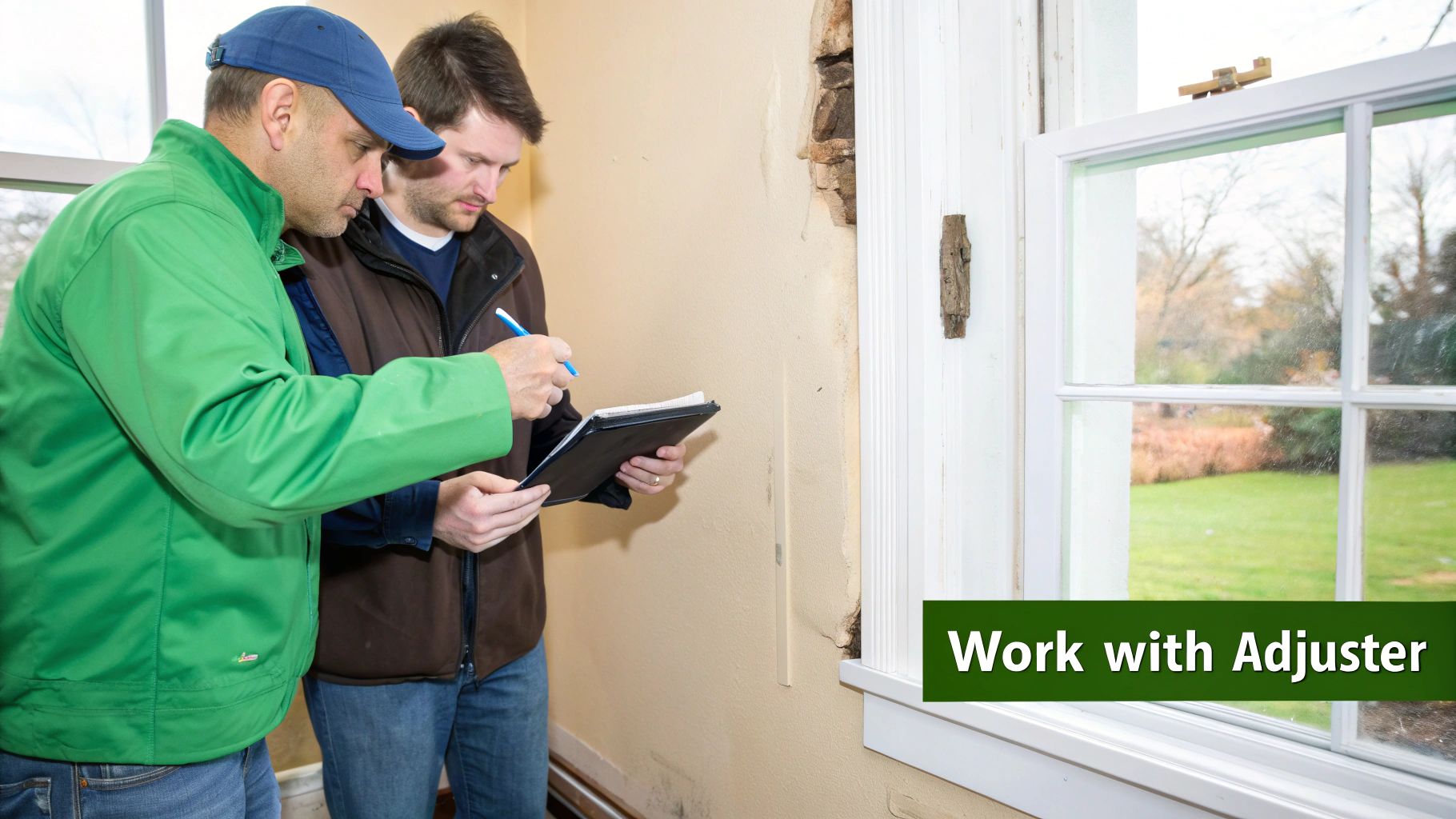
Once you file your claim, the insurance company will assign an adjuster to your case. This person’s job is to investigate what happened, assess the damage, and ultimately figure out how much the insurer owes you. This relationship is one of the most important parts of the claims process, and a little preparation on your end can go a long way.
The adjuster will need to inspect the damage firsthand, so expect them to schedule a visit to see your home or vehicle. It is absolutely essential that you are there for this inspection. You are your own best advocate—you can point out damage they might overlook and answer questions immediately, providing context that photos and notes just can't capture.
Getting Ready for the Adjuster's Visit
The key here is to be helpful, organized, and factual. Before the adjuster shows up, get your evidence file in order. You want to present everything clearly, not just hand them a messy stack of papers. A simple folder containing your home inventory, photos, and any relevant receipts will do the trick.
When they start asking questions, just stick to the facts. If you don't know the answer to something, it's perfectly fine to say, "I'm not sure." Guessing about the cause of damage or speculating on repair costs can muddy the waters and potentially hurt your claim down the road.
Keep a Simple Log: I always tell clients to document every single interaction with their adjuster. Just jot down the date, time, and a quick summary of what you talked about in every phone call or email. This log becomes an invaluable record for keeping details straight and holding everyone accountable.
It's also a smart move to understand the process from their side. Reading up on proven strategies for dealing with insurance adjuster tactics can give you some valuable insight before you even meet.
Your professionalism and preparation will set the tone for the entire process. After the inspection is complete, the adjuster will put together a settlement offer, which is the next major step. To get ready for that conversation, check out our guide on how to negotiate an insurance settlement.
It's Time to Review Your Settlement and Finalize the Claim
Getting that settlement offer can feel like a huge relief, but don't rush to the finish line just yet. This is the moment to pause and scrutinize every detail. The documents you receive will be packed with jargon and numbers that directly affect how much money you'll actually get.
Before you even think about signing, you need to be crystal clear on what kind of settlement you're being offered. Is it for replacement cost value (RCV), which covers the cost of buying new items, or actual cash value (ACV), which pays you for the item's depreciated worth? This single distinction can easily swing your payout by thousands of dollars.
Breaking Down the Offer and Negotiating a Fair Deal
It’s pretty common for an insurer's first offer to feel a bit… underwhelming. Don't panic. Think of it as the opening bid in a negotiation, not the final word. This is precisely when all the hard work you did documenting your loss pays off.
Pull out your inventory lists, photos, and the estimates you got from contractors. If the adjuster's valuation for your roof repair seems way off, you can counter with the professional quote you secured. The trick is to stay calm and professional, backing up every single one of your requests with solid proof.
This process is part of a massive global industry. With global insurance premiums recently growing by 8.6% to a staggering EUR7.0 trillion, it's clear just how many people are navigating claims. You can see the full breakdown in the global insurance report on Allianz.com.
What if the numbers are just too far apart and you believe the offer is genuinely unfair? You have options. Our guide on how to dispute an insurance claim walks you through the exact steps for challenging a lowball settlement.
Once you and the insurer have landed on a number that feels right, you'll sign a release form. Read this document with extreme care—signing it officially closes your claim for good.
Common Questions About the Claims Process
Even when you've done everything by the book, questions are bound to pop up. Knowing what to expect with common concerns can make the whole process feel less intimidating. Let’s walk through a few things people frequently ask.
How Long Do I Have to File a Claim?
This one is tricky because the answer varies by state and your specific policy. You'll often see the phrase "as soon as reasonably possible" in your contract, which is intentionally a little vague.
While some states might give you a year or more for certain types of property damage, waiting is never a good idea. It can make the insurance company suspicious and just makes proving your case that much harder. The best rule of thumb? Report the incident to your insurer immediately.
What if My Claim Gets Denied?
First off, don't panic. A denial is not the final word.
Your first move should be to carefully read the denial letter. You need to understand their exact reason for saying no. From there, you have the right to appeal the decision. This is where you'll want to gather any new evidence you have, write a clear letter explaining why you believe their decision is wrong, and get your agent involved to support you.
It's a common misconception that claims are only for physical damage. We're seeing a major shift in the industry right now, with a significant rise in claims related to mental health and long COVID. This is changing how insurers approach their work.
Will Filing a Claim Raise My Rates?
It might, but it's not a given. A few key factors come into play here, like who was at fault and your personal claims history.
For example, an at-fault car accident is far more likely to increase your premium than a claim for hail damage to your roof. Before filing for minor damage, it's always a good idea to talk with your agent about the potential impact. It helps you decide if it makes financial sense to even file the claim.
And if you're dealing with specialized professional equipment, you'll want to look into specific coverage like commercial UAV insurance to understand your options.
Navigating the claims process is just easier when you have an expert on your side. At Wexford Insurance Solutions, we act as your advocate, ensuring your claim is handled fairly from start to finish. Get the personalized support you deserve at https://www.wexfordis.com.
 Save on Car Insurance: how to lower car insurance premiumsClaims Made vs Occurrence Coverage A Complete Business Guide


